
Infinite Arc Start 208-719-3277—Trusted Caller Lookup examines how caller-id frameworks trace origin and verify contact data, aiming for transparency while preserving user autonomy. The approach weighs evidence, privacy, and practical usefulness for personal and business contexts. Its effectiveness depends on accessible data, verification methods, and how insights are applied to decision-making and pattern checks. The discussion leaves questions about reliability and cross-source corroboration unresolved, inviting a closer look at how such tools perform in real-world scenarios.
What Is Infinite Arc Start 208-719-3277 and How It Helps
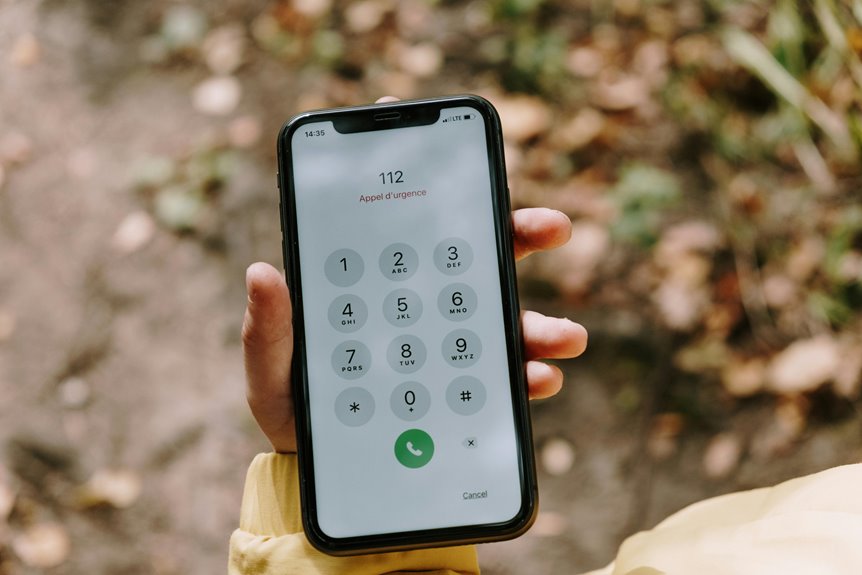
Infinite Arc Start 208-719-3277 refers to a caller-id identifier used by a particular contact or service, and it functions as a means to trace or verify the origin of an incoming call. In this balanced, evidence-based view, the concept supports transparency through trusted lookup, enabling users to assess caller history and contact verification while preserving autonomy and freedom in communication choices. Infinite arc.
How to Use Trusted Caller Lookup Effectively
A clear approach to trusted caller lookup involves understanding what information is accessible, how it is verified, and how it can be used to make informed decisions about incoming calls.
In practice, users assess patterns, cross-check data sources, and balance privacy with transparency.
A disciplined method emphasizes trusted caller,lookup accuracy, minimizing false positives while supporting autonomy and safer communication.
Evaluating Accuracy and Reliability for Your Line
Evaluating accuracy and reliability for a line involves assessing the trustworthiness of caller data, the methods used to verify it, and the potential impact of errors on decision making.
The assessment remains balanced, evidence-based, and curious, recognizing freedom to question sources.
Inaccurate data, privacy concerns, incorrect attributions, and monitoring risks shape cautious interpretation and ongoing data validation for robust trust.
Real-World Use Cases: Personal and Business Scenarios
In real-world contexts, both individuals and organizations use trusted caller lookup to reduce uncertainty in communications, evaluate unfamiliar numbers, and inform timely actions.
This approach reveals patterns behind the infinite arc of incoming calls, guiding selective engagement and risk assessment.
For both personal safety and business efficiency, the trusted caller facilitates informed decisions, clarity, and autonomy within noisy communication ecosystems.
Conclusion
In a world of glittering caller IDs and inscrutable numbers, trusted lookup promises transparency without surrendering privacy. The evidence suggests useful signal—caller history, verification, cross-checks—yet noise remains, and misclassification lurks where data quality falters. Practitioners can glean patterns, but must beware overconfidence when sources conflict. Satirically, the mighty “trust score” may resemble a polite illusion: helpful in moderation, dangerously persuasive in excess. Balanced verdict: use data as guidance, not gospel, and question every derived certainty.


 By
By


 By
By