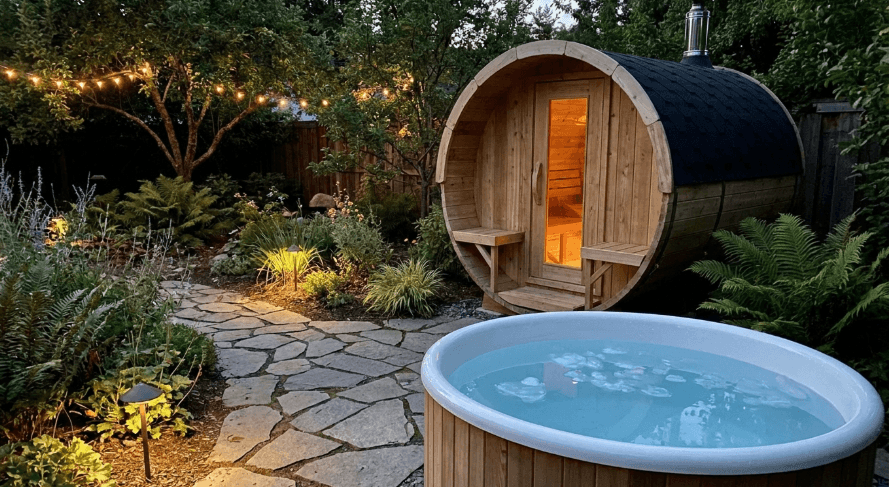

A traditional dry sauna runs hotter, typically 150 to 190 degrees Fahrenheit, uses a wood or electric heater with stones, and generally needs a dedicated 240-volt circuit and real clearance around the heater. An infrared cabin heats the body more directly with carbon or ceramic panels at a lower air temperature, often plugs into a standard 120-volt outlet, and warms up faster session to session. For daily use, the right choice usually comes down to how much heat you actually want, how much electrical work you are willing to do, and how much space you have to give it.
What Makes Traditional Heat Different, Session After Session?
A traditional sauna heats the air first, then the body, using an electric or wood-burning heater topped with stones that hold and radiate heat, often with water splashed on them to add humidity in short bursts. That produces the intense, enveloping heat people associate with a classic sauna experience, along with a longer warm-up. Kiln-dried cedar or heat-treated softwood paneling is standard because it tolerates the heat and moisture cycle without warping the way construction-grade lumber would over months of daily use, and bench placement matters since air temperature rises noticeably from floor to ceiling, so a higher bench runs hotter than a lower one in the same room.
What Makes Infrared Different, Session After Session?
An infrared cabin uses carbon or ceramic panels that emit infrared energy, which warms the body directly rather than heating the surrounding air to the same degree. Cabin air temperature in an infrared unit usually sits in the 120 to 150 degree Fahrenheit range, noticeably lower than a traditional sauna, while still producing a strong sweat response for many users. Panels are typically rated as low-EMF, meaning the electromagnetic field they generate during operation is reduced compared with older heating-panel designs, which is a spec worth checking on a listing sheet if it matters to you. Most residential units are built to run on a standard 120-volt household outlet, which removes a step that a traditional heater install usually requires.
Which One Warms Up Faster for a Daily Routine?
This is where the daily-use question gets practical fast. An infrared cabin often reaches a usable temperature in 10 to 15 minutes, since it is heating panels rather than a large volume of air to a high temperature. A traditional sauna typically needs 20 to 40 minutes to climb from a cold start to 150 to 190 degrees, depending on heater size and room insulation. For someone squeezing a sauna session into a busy weekday, that warm-up gap adds up over a year of daily use, and it is one of the more concrete differences between the two formats rather than a matter of preference.
What Does the Wiring Actually Require?
A traditional heater above roughly 3 kilowatts, which covers most home units capable of heating a real room, generally needs a dedicated 240-volt circuit sized to the heater’s rated draw, along with proper clearances around the unit itself. An infrared cabin sidesteps most of that, typically running on a standard 120-volt outlet already present in most rooms, which is a meaningful reason some daily users choose infrared for a basement, garage, or apartment setup where adding a 240-volt line is not realistic. Anyone weighing options side by side can see the full lineup to compare voltage requirements and cabin dimensions before deciding which format actually fits the space and electrical panel available.
Which One Has More Research Behind It?
The published cardiovascular research is concentrated on traditional Finnish-style sauna bathing. A 2018 review in Mayo Clinic Proceedings and a 2018 systematic review in Evidence-Based Complementary and Alternative Medicine both summarize associations between regular dry sauna bathing and favorable cardiovascular patterns, drawn largely from populations using traditional heat. Infrared cabins are a newer, different format, and applying traditional-sauna research to an infrared purchase stretches the data to a setup it was not built around. That does not mean infrared lacks any benefit, only that the specific research base most often cited belongs to the traditional format.
Which Fits a Small Space Better?
Infrared cabins are generally more compact, since they do not need the airflow and clearance space a large stone-topped heater requires, and a two-person infrared unit can often fit where a traditional sauna simply would not. A traditional sauna, particularly a barrel-style build, needs enough clearance around the heater guard and enough headroom for the bench layout to work, which adds up in a small garage corner or narrow side yard. For anyone tight on square footage, that clearance difference is often the deciding factor before heat style even enters the conversation.
What About Upkeep Over a Year of Daily Use?
Both formats hold up well with basic care, but the specific maintenance differs. A traditional sauna’s interior wood benefits from a periodic wipe-down and, on any exterior-facing surface, a resealed finish every couple of years, while the heater’s stones occasionally need replacing as they crack from repeated heat cycling. An infrared cabin has fewer moving parts in that sense, since there are no stones to replace, though the panels themselves have a rated lifespan and eventually need swapping after years of daily operation. Neither format demands heavy weekly maintenance, but a traditional sauna asks slightly more of an owner over time than an infrared cabin does.
So Which One Actually Suits Daily Use?
Someone who wants the classic high-heat experience, has the electrical capacity for a 240-volt circuit, and has the space for proper clearances is generally better served by a traditional sauna. Someone prioritizing a fast daily warm-up, simpler electrical needs, and a smaller footprint tends to lean infrared. Neither is a wrong answer for daily use; they are built around different heat delivery, different warm-up times, and different installation requirements, and the better fit depends on the space and electrical panel already in place more than on any single performance claim.
Frequently Asked Questions
Which type of sauna warms up faster for a daily session? Infrared cabins generally reach a usable temperature in 10 to 15 minutes, compared with 20 to 40 minutes for a traditional sauna to reach full heat.
Does an infrared sauna need special electrical work like a traditional one does? Usually not. Most infrared cabins run on a standard 120-volt outlet, while traditional heaters above roughly 3 kilowatts typically need a dedicated 240-volt circuit.
Is the health research the same for traditional and infrared saunas? Most published cohort research comes from traditional Finnish-style saunas, so applying it to infrared cabins extends the data rather than directly matching it.
Which type fits better in a small space for daily use? Infrared cabins tend to be more compact and need less clearance, which often makes them a simpler fit for a small room or garage corner.
References
- Cardiovascular and Other Health Benefits of Sauna Bathing: A Review of the Evidence, Mayo Clinic Proceedings, 2018
- Clinical Effects of Regular Dry Sauna Bathing: A Systematic Review, Evidence-Based Complementary and Alternative Medicine, 2018
- Benefits and risks of sauna bathing, The American Journal of Medicine, 2001


 By
By

 By
By
 By
By
 By
By