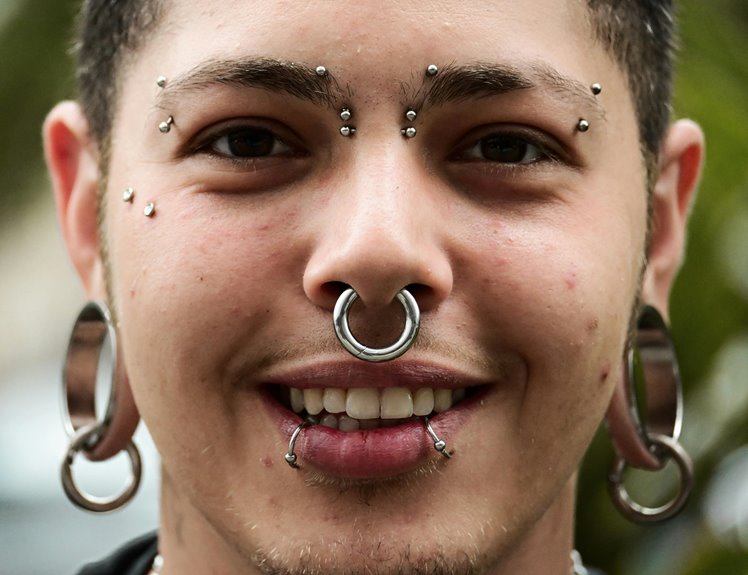

The Angel Fang piercing sits along the upper jaw’s vestibule, curving with the mouth’s natural arc for discreet wear. It typically involves mild to moderate pressure and brief swelling, with healing contingent on hygiene, material, and aftercare consistency. The style benefits from careful sizing and appropriate jewelry choices to minimize tooth contact. A skilled, hygienic piercer is crucial to reduce risks and support a clear aftercare plan, leaving questions that warrant careful consideration before proceeding.
Angel Fang Piercing: What It Is and Who Should Get It?
An Angel Fang piercing is a cartilage-based lip modification involving a curved barbell or custom labial ring placed in the oral vestibule near the upper canine teeth.
The procedure targets adults seeking discreet expression while preserving oral function.
Candidates should consider lifestyle impact and healing timelines.
Potential concerns include cluster infections and jewelry allergies, requiring careful material selection and hygiene adherence.
Placement, Sizing, and Jewelry Options
The Angel Fang piercing is positioned within the oral vestibule near the upper canine teeth, with the arc following the natural curvature of the mouth to minimize contact with teeth and gums.
Placement options favor secure, professional bioplast or surgical steel, while sizing considerations emphasize appropriate post length and gauge to maintain comfort, hygiene, and aesthetic balance.
Pain, Healing, and Aftercare You Can Count On
Pain, healing, and aftercare for the Angel Fang piercing require a concise, evidence-based approach; understanding expected sensations, timelines, and practical steps helps reduce complications.
The process involves pain management strategies, clean routines, and monitoring for signs of infection.
Healing timelines vary; maintain hygiene, avoid irritants, and follow professional guidance to support consistent recovery and safe, confident wear.
Choosing a Piercer and Avoiding Common Issues
Choosing a skilled piercer is foundational to a successful Angel Fang piercing, as technique, equipment, and hygiene directly influence risk and healing outcomes.
The reviewer emphasizes choosing piercers who present transparent sterilization practices and licensing.
Selecting jewelry, review of materials, and gauge compatibility matter.
Avoiding infections hinges on aftercare clarity; understanding risks informs decisions, enabling freedom with responsible, informed choices.
Conclusion
A professional, hygienic approach to the Angel Fang piercing emphasizes respect for oral health and meticulous aftercare. When performed by a skilled piercer using approved materials, the procedure tends to be associated with mild to moderate discomfort and a clear, manageable healing timeline. An interesting statistic: studies show that proper sterilization and aftercare reduce infection risk in oral piercings by up to 70%. This underscores the importance of choosing experienced practitioners and adhering to prescribed care protocols for safer outcomes.


 By
By



 By
By