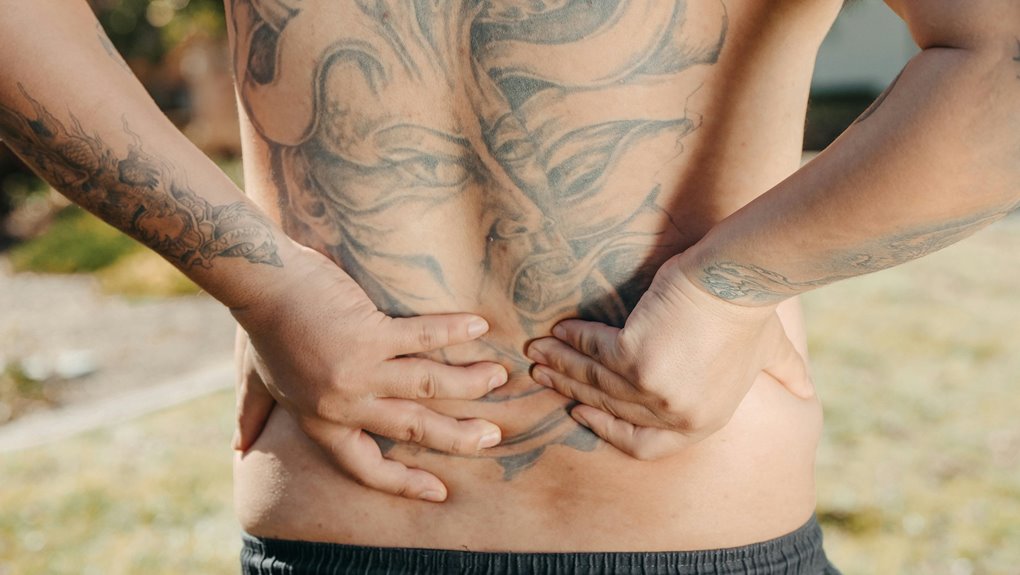

Back tattoos present variable pain, depending on location and individual factors. The spine and densely innervated points tend to produce sharper, brief discomfort, while broader back areas yield more diffuse, tolerable sensations. Pain is influenced by skin thickness, ink depth, needle type, session length, and anxiety. Understanding these elements can frame expectations, guide preparation, and inform pacing during the process, leaving practitioners and clients with a clearer framework and a rationale to pursue further assessment.
How Back Tattoo Pain Feels: Spine vs. Broad Areas
The sensation of back tattoo pain varies by location, with distinct experiences reported along the spine compared with broader, flat areas.
Back placement influences perceived intensity, with concentrated regions showing heightened sensitivity.
Nerve sensitivity along the spine may produce sharper, intermittent discomfort, while larger, flat zones often yield diffuse, tolerable sensation.
Clinically, variability reflects anatomical innervation patterns and tissue resilience.
What Affects Your Pain Level During a Back Tattoo
Pain levels during a back tattoo are influenced by a combination of anatomical, procedural, and individual factors. The discussion centers on nerve density, skin thickness, and sensitivity in various back regions, plus needle type, session duration, and ink depth. Considerations include new tattoo fears and budgeting for ink, which shape expectations without altering physiological nociception.
Practical Tips to Reduce Discomfort During Sessions
Practical strategies to minimize discomfort during back tattoo sessions focus on procedural optimization, client preparation, and real-time sensory management. The discussion presents ideas about back tattoos and pain management as objective considerations, avoiding prescriptive guarantees. Procedural optimization includes needle technique and timing; client preparation covers nourishment and rest; real-time sensory management emphasizes breathing, posture, and feedback cycles for adaptive pacing.
How to Talk to Your Artist for a Comfortable Experience
Effective communication with the tattoo artist is a critical determinant of comfort during the session. The discussion should be structured, direct, and focused on expectations, consent, and procedural detail. Researchers emphasize minimizing uninformative fluff and avoiding unrelated questions that derail clarity. Clients should articulate pain thresholds, timing breaks, and aftercare concerns succinctly to optimize the experience without compromising artistic integrity or safety.
Conclusion
Back tattoos provoke varying pain experiences, shaped by location, technique, and individual factors. The spine and concentrated nerves typically produce sharper, brief discomfort, while broader back areas generate more diffuse sensations. Preparation, pacing, and explicit artist communication mitigate distress, alongside breathing and rest breaks. A measured approach—clear expectations, informed consent, and attentive aftercare—supports smoother healing. In this context, the process is a landscape: a measured expedition across terrain where patient resilience and skilled hands chart progress.


 By
By


 By
By