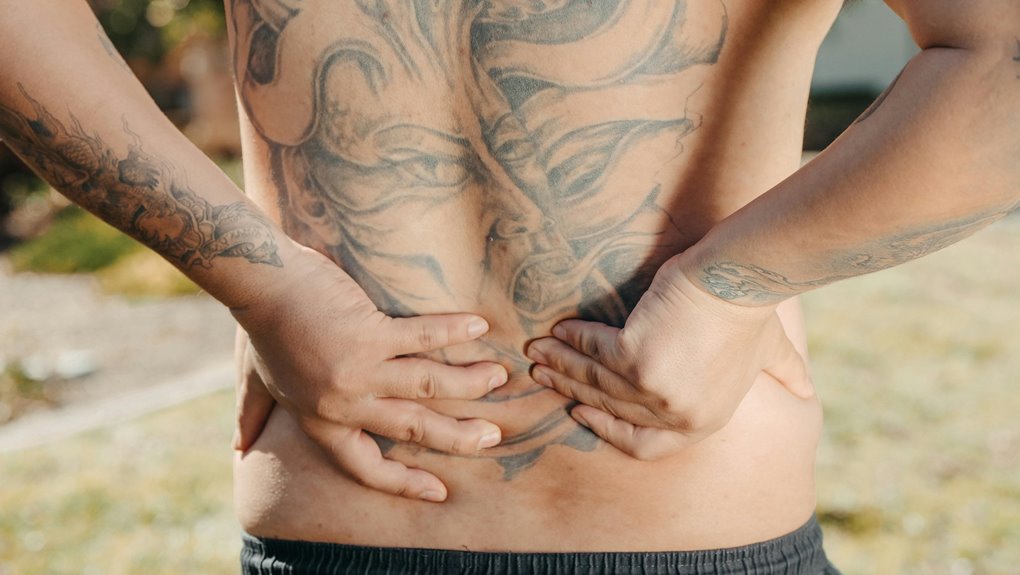

Spine tattoos can provoke varied pain due to the underlying anatomy, with sharp stings over bone and denser tissue producing deeper pressure elsewhere. The experience is influenced by needle intensity, location, and the individual’s anxiety and prior tattoo history. Breathing techniques and real-time adjustments may ease discomfort, but positioning and reflexive responses can heighten sensations. Skin tolerance and proper aftercare support healing, though the overall experience remains unpredictable, leaving readers with practical questions to consider as they plan their session.
What Makes Spine Tattoo Pain Different?
The spine presents a distinct pain profile due to its dense neural and bony structures and the proximity of the spinal cord, nerve roots, and vertebral processes to the skin.
Spine anatomy influences nociceptor density and nerve pathways, shaping intensity and duration.
Clinically, dermal sensation varies with location; precision technique minimizes discomfort and protects underlying neural structures during tattooing.
How Pain Feels During a Spine Session
During a spine tattoo session, pain is typically described as a sharp, stinging sensation interspersed with deeper, duller pressure, varying by location and skin thickness.
Clinically, patients report a defined pain sensation that corresponds to needle intensity, with peak discomfort at dense or bony regions and relief when skin tolerance is higher.
Individual thresholds influence perceived severity and duration of sensation.
Tips to Minimize Discomfort and Speed Healing
Medical professionals recommend a combination of preparation, real-time pain management, and post-session care to minimize discomfort and accelerate healing. The discussion identifies practical steps and evidence-based practices, including topical analgesics, breathing techniques, and wound care routines. Tips to minimize stress, maintain hydration, and monitor for infection are emphasized to speed healing, while recognizing individual variability and ongoing research. Other discussion ideas are noted.
Factors That Influence Your Pain Experience
Pain experiences during spine tattooing vary widely and are shaped by multiple interacting factors, including individual pain thresholds, anxiety levels, prior tattoo experience, and the specific area treated.
Individual variance persists due to skin and tissue sensitivity, anatomical complexity, and transient physiological responses.
Intense nerve sensations may occur with deeper needle penetration, while muscles spasm can arise from reflexive body protection and positioning.
Conclusion
Spine tattoo pain varies with anatomy, technique, and mindset, producing sharp, stinging sensations over bone and duller pressure elsewhere. Evidence-supported strategies—breathing, topical analgesia, controlled needle intensity, and careful positioning—can reduce distress and facilitate healing. Individual tolerance, prior tattoo experience, and anxiety levels modulate the experience, yet hydration and skin care support recovery. In sum, pain is predictable yet individualized, like a map that reveals both terrain and constraints. It is a guide, not a verdict, shaping the session’s course.


 By
By


 By
By