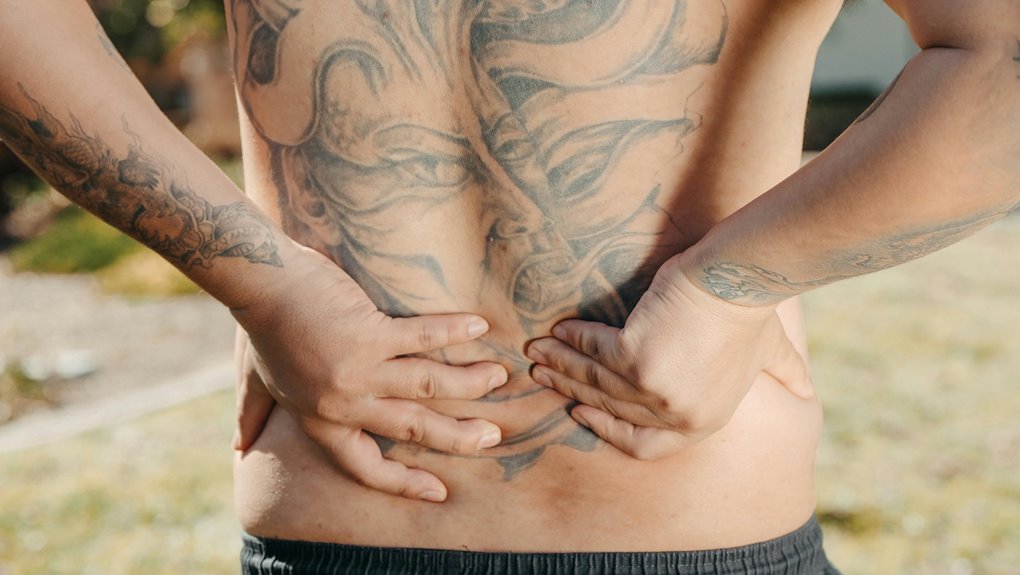

Spine tattooing involves needle penetration along the central back, producing sharp, brief impulses followed by dull ache, burning, and pressure. Pain intensity varies with needle type, technique, skin condition, anatomy, and individual sensitivity, shaped by nerve pathways and axial rigidity. Techniques that limit discomfort include precise control, proper positioning, gradual ink deposition, and regulated breathing. Effective pre- and post-care supports healing and pain management, but each session presents unique challenges that warrant careful consideration before proceeding. The specifics merit closer examination.
What a Spine Tattoo Feels Like: Pain Timeline and Sensations
A spine tattoo typically involves a sharp, persistent sensation during needle penetration along the spine’s central column, with variability tied to needle type, technique, and individual pain sensitivity.
The observed experience encompasses brief sharp moments followed by dull ache, burning, and pressure.
Spine tattoo sensations vary in intensity and duration; clinicians document a predictable pain timeline influenced by skin condition, anatomy, and movement during sessions.
Factors That Influence Spine Tattoo Pain
Spine tattoo pain is not uniform; several factors modulate the sensory experience during needle penetration and ink deposition. Individual anatomy and variation in spine anatomy influence nociceptor distribution and tissue resilience.
Nerve pathways determine referral patterns, while skull stiffness may reflect overall axial rigidity affecting perceived tension.
Tattoo fatigue and session pacing also modulate discomfort, shaping tolerability and recovery.
How to Minimize Pain During the Session
Pain during spine tattoo sessions can be mitigated through a combination of technique, preparation, and pacing. The procedure benefits from precise needle control, proper client positioning, and informed consent. Pre-session strategies include topical analgesia consideration and confirmed break scheduling. During the session, gradual ink deposition, breath regulation, and brief pauses reduce intensity. two word idea 1, two word idea 2.
Aftercare and Pain Management for Healing on the Spine
Post-tattoo care on the spine requires strict adherence to evidence-based protocols to support re-epithelialization and minimize delayed healing; effective pain management is most often achieved through a combination of site-specific wound care, prescribed topical agents, and staggered activity modifications.
Pain coping strategies, when aligned with medical guidance, contribute to a predictable healing timeline and reduce complication risk, promoting safer recovery.
Conclusion
In assessing spine tattoo discomfort, the prevailing pattern is brief sharp sensations punctuating longer dull or burning awareness, modulated by technique, anatomy, and individual sensitivity. With precise needle control, progressive ink deposition, and attentive positioning, pain tends to remain manageable for many clients. Adequate pre- and post-care further supports comfort and healing. As the adage goes, “measure twice, cut once”—a prudent approach minimizes risk and enhances overall outcomes during spine tattooing.


 By
By



 By
By